Last Updated: July 2026
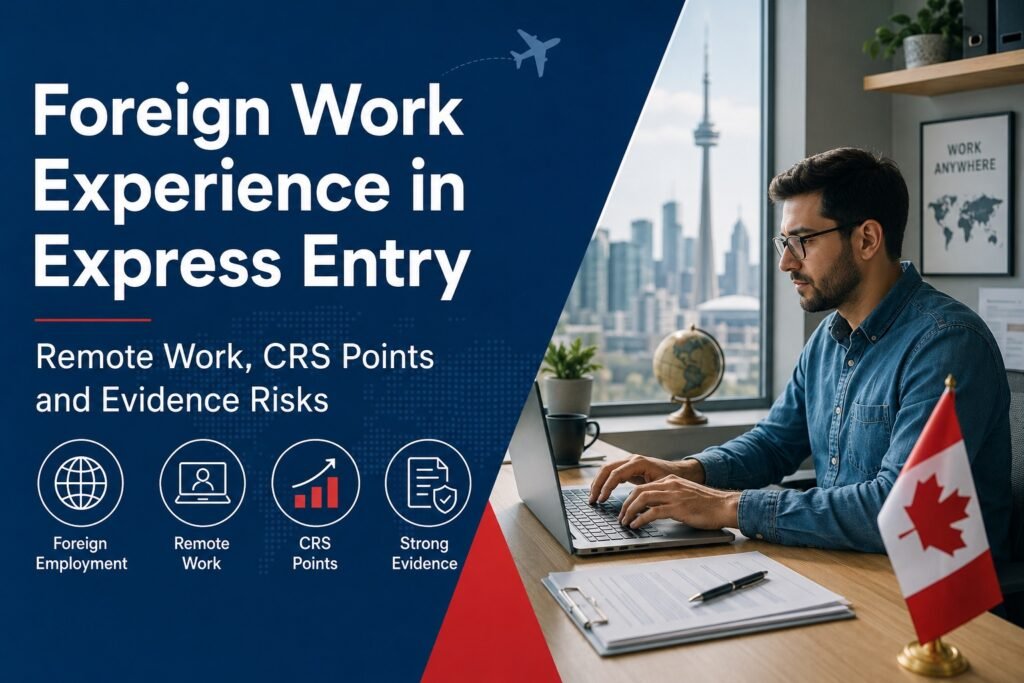
Many Express Entry applicants gain foreign work experience while living outside Canada. Today, however, remote work has created new situations that were far less common when the Express Entry system was introduced.
Some applicants live in Canada while working remotely for employers located abroad. Others work for both Canadian and foreign employers at the same time or provide services to overseas clients through self-employment. As these work arrangements have become increasingly common, many applicants are left wondering whether their experience qualifies for Express Entry and how IRCC will assess it.
Unlike many other aspects of Express Entry, there is relatively little publicly available guidance addressing remote foreign work experience. While recent professional discussions have referenced IRCC operational guidance and Immigration Representatives Mailbox (ImmReps) responses, each application continues to be assessed based on its individual facts, the applicable legislation, and the evidence submitted in support of the claim.
This article explains what is currently known about foreign work experience in Express Entry, discusses common remote work scenarios, outlines the supporting evidence applicants should consider providing, and highlights potential risks where work experience is challenged during the application process.
Note: This article is based on the Immigration and Refugee Protection Act (IRPA), the Immigration and Refugee Protection Regulations (IRPR), the Ministerial Instructions respecting the Express Entry system, publicly available IRCC guidance, and publicly discussed IRCC operational guidance available at the time of writing. As this area continues to evolve, applicants should always refer to the most current IRCC requirements when assessing their eligibility.
What Is Foreign Work Experience in Express Entry?
Foreign work experience is skilled work performed outside Canada that may be used to meet eligibility requirements or claim Comprehensive Ranking System (CRS) points under Express Entry, provided it satisfies the applicable legal requirements.
Depending on the immigration program and the applicant’s circumstances, foreign work experience may affect:
- Federal Skilled Worker (FSW) eligibility;
- CRS points for foreign skilled work experience; and
- Skill transferability factors.
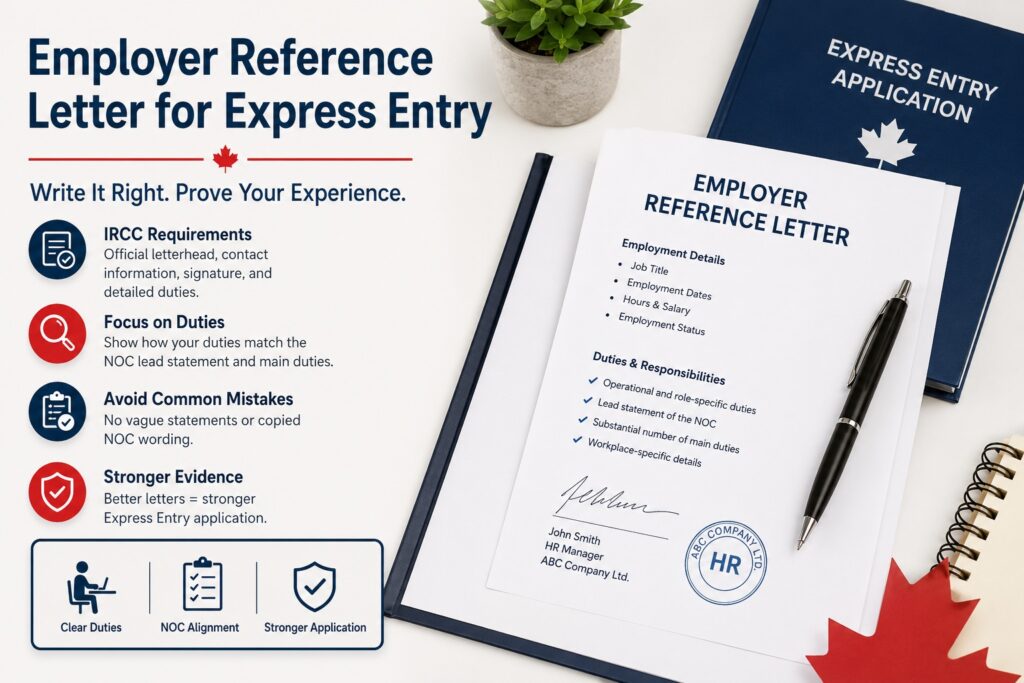
To qualify, applicants must still demonstrate that the work experience meets the applicable legal requirements, including the relevant National Occupational Classification (NOC), qualifying work period, and supporting evidence. Applicants should also ensure their employer reference letters accurately describe their duties and responsibilities and that their employment aligns with the selected NOC.
Does Remote Work Count as Foreign Work Experience?
Remote work has become increasingly common, but whether it qualifies as foreign work experience under Express Entry depends on the applicant’s specific circumstances and the applicable legal requirements.
IRCC’s Functional Guidance dated January 30, 2024, as publicly discussed by immigration professionals, indicates that concurrent Canadian and foreign work arrangements are not automatically precluded by the “work in excess” provisions. However, applicants continue to bear the burden of establishing that each claimed period of work experience is genuine, properly documented, and otherwise satisfies the applicable Express Entry requirements.
Each application is assessed on its own facts. Factors such as the nature of the employment, where the work was performed, the employer or client’s location, and the supporting documentation may all be relevant to IRCC’s assessment.
Because publicly available guidance on some remote work scenarios remains limited, applicants should avoid assuming that all remote foreign employment automatically qualifies for Express Entry.
Why This Issue Has Become More Common
Modern work arrangements are no longer limited by national borders. Today, applicants may:
- work remotely in Canada for a foreign employer;
- perform Canadian and foreign employment simultaneously;
- provide remote services to overseas clients; or
- work from different countries during the same period of employment.
These situations often require a careful review of the applicable legal requirements and supporting evidence before claiming foreign work experience under Express Entry.
IRCC’s Current Operational Guidance
Unlike many other Express Entry issues, there is limited publicly available guidance addressing remote foreign work performed while an applicant is physically in Canada.
However, publicly discussed IRCC Functional Guidance dated January 30, 2024 and subsequent Immigration Representatives Mailbox (ImmReps) responses indicate that certain concurrent Canadian and foreign work arrangements are not automatically precluded by the ‘work in excess’ provisions under the current Ministerial Instructions. Rather, each case must be assessed on its own facts and supporting evidence.
The guidance also emphasizes that officers remain responsible for assessing whether the claimed work experience is genuine and whether the applicant has provided sufficient evidence to establish that the work meets the applicable Express Entry requirements.
Applicants should therefore avoid assuming that remote work automatically qualifies simply because the employer is located outside Canada. Where uncertainty exists, the quality, credibility, and consistency of the supporting documentation may be as important as the legal interpretation itself.
Note: The operational guidance discussed above has been publicly referenced by immigration professionals through IRCC Functional Guidance and Immigration Representatives Mailbox (ImmReps) responses. These materials are intended to provide insight into IRCC’s operational approach. They do not replace the Immigration and Refugee Protection Act (IRPA), the Immigration and Refugee Protection Regulations (IRPR), or the Ministerial Instructions respecting the Express Entry system, which remain the primary legal framework governing Express Entry applications.
Supporting Evidence for Foreign Work Experience
Applicants claiming foreign work experience should ensure their employment is supported by clear, credible, and consistent evidence. The burden remains on the applicant to establish that the claimed work experience meets the applicable Express Entry requirements.
Depending on the circumstances, supporting evidence may include:
- employer reference letters;
- employment contracts;
- pay slips or payroll records;
- tax documents;
- bank statements showing salary deposits;
- company registration or business records;
- proof of the employer’s operations; and
- other documents supporting the remote work arrangement, where applicable.
The evidence submitted should be consistent with the applicant’s Express Entry profile and accurately establish the qualifying work period, job duties, hours of work, and other relevant employment details. Weak or inconsistent evidence may lead to concerns about the applicant’s claimed work experience and, in some cases, result in an A11.2 refusal or a Procedural Fairness Letter before a final decision is made.
Common Mistakes When Claiming Foreign Work Experience
Many Express Entry concerns arise not because the work experience is ineligible, but because it is not properly documented or explained. Common mistakes include:
- claiming work experience without sufficient supporting evidence;
- submitting employer reference letters that do not accurately describe the job duties;
- failing to explain remote or concurrent work arrangements;
- providing inconsistent employment dates or job information across documents; and
- claiming CRS points without confirming that the work experience meets the applicable requirements.
How IRCC May Assess Remote Foreign Work Experience
Although each application is assessed individually, officers may consider whether the claimed employment is supported by credible and consistent evidence. Depending on the circumstances, this may include reviewing the employer’s existence, the applicant’s job duties, the qualifying work period, payroll records, and whether the overall documentation supports the work experience claimed.
Where the employment involves remote or concurrent work arrangements, applicants should be prepared to clearly explain the nature of the employment and provide supporting documentation where appropriate.
Frequently Asked Questions (FAQs)
Can I claim foreign work experience while living in Canada?
It depends. Foreign work experience is assessed based on the applicable legal requirements and the specific facts of the application. Applicants working remotely for employers outside Canada should ensure they meet the applicable requirements and retain sufficient evidence to support their claim.
Does remote work for a foreign employer automatically qualify under Express Entry?
No. Working remotely for a foreign employer does not automatically mean the work qualifies as foreign work experience. Each application is assessed individually based on the applicable requirements and the supporting evidence submitted.
Can I claim Canadian and foreign work experience for the same period?
Recent publicly discussed IRCC operational guidance suggests that certain concurrent Canadian and foreign work arrangements are not automatically precluded under the current Ministerial Instructions. However, applicants must still establish that each claim satisfies the applicable requirements and is supported by credible evidence.
What documents should I provide to support foreign work experience?
Depending on the circumstances, applicants may provide employer reference letters, employment contracts, payroll records, tax documents, proof of payment, and other documents establishing the claimed work experience.
Can IRCC verify my foreign employment?
Yes. IRCC may assess the credibility of the claimed employment and review the supporting documentation submitted with the application. Applicants should ensure that all information is accurate, consistent, and supported by reliable evidence.
What happens if IRCC does not accept my claimed foreign work experience?
If IRCC concludes that the claimed work experience does not satisfy the applicable requirements, it may affect the applicant’s eligibility or Comprehensive Ranking System (CRS) score, depending on the circumstances of the application.
Conclusion
Foreign work experience has become one of the most frequently discussed topics in Express Entry as remote and cross-border employment continue to grow. While recent publicly discussed operational guidance provides helpful insight into how certain remote and concurrent work arrangements may be assessed, each application continues to be decided on its own facts and supporting evidence.
Applicants should avoid assuming that remote work automatically qualifies as foreign work experience. Instead, they should ensure that every claimed period of employment meets the applicable legal requirements and is supported by credible, consistent, and well-documented evidence.
Where uncertainty exists, obtaining professional advice before claiming CRS points may help avoid unnecessary delays, eligibility concerns, or disputes during the assessment of an Express Entry application.
References
- Immigration and Refugee Protection Act, S.C. 2001, c. 27.
- Immigration and Refugee Protection Regulations, SOR/2002-227.
- Ministerial Instructions Respecting the Express Entry System (current version).
- Immigration, Refugees and Citizenship Canada (IRCC), Express Entry Program Delivery Instructions.
- Immigration, Refugees and Citizenship Canada (IRCC), Comprehensive Ranking System (CRS).
- Immigration, Refugees and Citizenship Canada (IRCC), Express Entry eligibility requirements.
- Publicly discussed IRCC Functional Guidance (January 30, 2024), shared by immigration lawyer Steven Meurrens.
- Burcu Akyol, RCIC-IRB, Understanding IRCC Guidance on Concurrent and Remote Foreign Work Experience(2025).
Disclaimer: This article is provided for general informational purposes only and does not constitute legal advice or create a consultant-client relationship. Immigration applications are assessed based on the individual facts of each case, the evidence submitted, and the applicable legislation, regulations, Ministerial Instructions, and IRCC policies in effect at the time a decision is made.