A study permit from inside Canada as a visitor is not available simply because a foreign national is already physically present in Canada. Canadian immigration law distinguishes between being legally present in Canada as a visitor and being eligible to submit a study permit application after entering Canada.
Under section 213 of the Immigration and Refugee Protection Regulations (IRPR), the general rule is that a foreign national must apply for a study permit before entering Canada, subject to specific exceptions. IRPR 215 identifies the categories of foreign nationals who may apply for a study permit after entering Canada.
This distinction is important for visitors who receive admission to a Canadian school or decide to pursue studies while already in Canada. An acceptance letter from a designated learning institution (DLI) does not, by itself, make a visitor eligible to apply under the in-Canada provisions.
Key point: Being physically inside Canada and being eligible to apply for a study permit after entering Canada are two different questions.
1. The General Rule: Applying for a Study Permit Before Entering Canada
IRPR 213 establishes the starting point. Subject to the exceptions provided by the Regulations, a foreign national seeking to study in Canada must apply for a study permit before entering Canada.
IRCC’s study permit application instructions similarly state that, generally, a study permit must be applied for before coming to Canada, while only certain people are eligible to apply from within Canada.
IRPR 215 then creates specific exceptions allowing certain foreign nationals to apply after they have entered Canada.
This means a person should not assume that having valid visitor status—or receiving an offer of admission while visiting Canada—automatically allows them to submit an in-Canada study permit application.
The first question should therefore be:
Does the applicant fall within one of the categories authorized to apply after entering Canada under IRPR 215?
2. Who Can Apply for a Study Permit from Inside Canada Under IRPR 215?
IRPR 215 permits several categories of foreign nationals to apply for a study permit after entering Canada. These include, among others, a foreign national who:
- already holds a study permit;
- holds a work permit;
- is subject to an unenforceable removal order;
- holds a temporary resident permit that is valid for at least six months;
- is a temporary resident studying at the preschool, primary or secondary level;
- is a visiting or exchange student studying at a DLI;
- has completed a course or program of study that was a prerequisite to enrolling at a DLI; or
- falls within certain other circumstances specifically prescribed by the Regulations.
IRPR 215(2) also permits certain family members of foreign nationals residing in Canada to apply after entry where the person in Canada meets the conditions specified in the Regulation.
The exact provision should be reviewed against the applicant’s circumstances rather than assuming that temporary resident status itself is sufficient.
The Prerequisite Course or Program Exception
One particularly important provision for temporary residents is IRPR 215(1)(f)(iii).
It allows a temporary resident to apply after entering Canada where they have completed a course or program of study that is a prerequisite to their enrolling at a DLI.
The fact that a person has taken some form of education or training in Canada does not necessarily bring them within this provision. The previous course or program must satisfy the requirements of the regulatory exception.
Family Members in Canada
Certain family members may also qualify under IRPR 215(2). However, being the spouse, child or other relative of someone living in Canada should not automatically be treated as eligibility to apply from within Canada. The precise requirements of the applicable provision still have to be established.
3. What If You Are in Canada as a Visitor but Do Not Qualify Under IRPR 215?
This is where considerable confusion occurs.
Visitor status alone is not an IRPR 215 category.
A visitor may be legally residing in Canada, obtain admission to a Canadian college or university, receive a PAL or TAL where required, and have sufficient funds for their studies—but those facts do not independently create eligibility to apply after entry under IRPR 215.
Where the person does not qualify under an applicable in-Canada provision, the study permit may instead have to be submitted through the process applicable to an application made before entry.
IRCC’s study permit materials identify IMM 1294, Application for a Study Permit Made Outside of Canada, for this application process.
This can produce a situation that initially appears unusual: an applicant may be physically present in Canada as a visitor but may still need to use the process for applying for a study permit from outside Canada.
In one application we prepared, for example, the applicant was physically present in Canada with visitor status, but the submission expressly requested that the study permit application be assessed as an application made from outside Canada. The application also explained that the applicant would leave Canada and re-enter following approval to complete the process of entering Canada as a student.
The important distinction is therefore between the applicant’s physical location and the legal basis and process under which the study permit application is submitted.
4. Maintaining Legal Visitor Status While a Study Permit Application Is Processing
A visitor considering studies must also pay attention to their existing temporary resident status.
A pending study permit application should not be confused with the person’s separate authorization to remain in Canada as a visitor.
Where a visitor’s authorized period of stay is approaching expiry, it may be necessary to apply to extend their temporary resident status. In one case, for example, the applicant applied for a visitor record before the expiry of his authorized stay while preparing a further study permit application. The purpose was to preserve lawful temporary resident status while the study permit matter was being addressed.
There are therefore two separate issues:
1. Is the person authorized to remain in Canada?
2. Is the person authorized to study in Canada?
Maintaining temporary resident status does not, by itself, provide authorization to study.
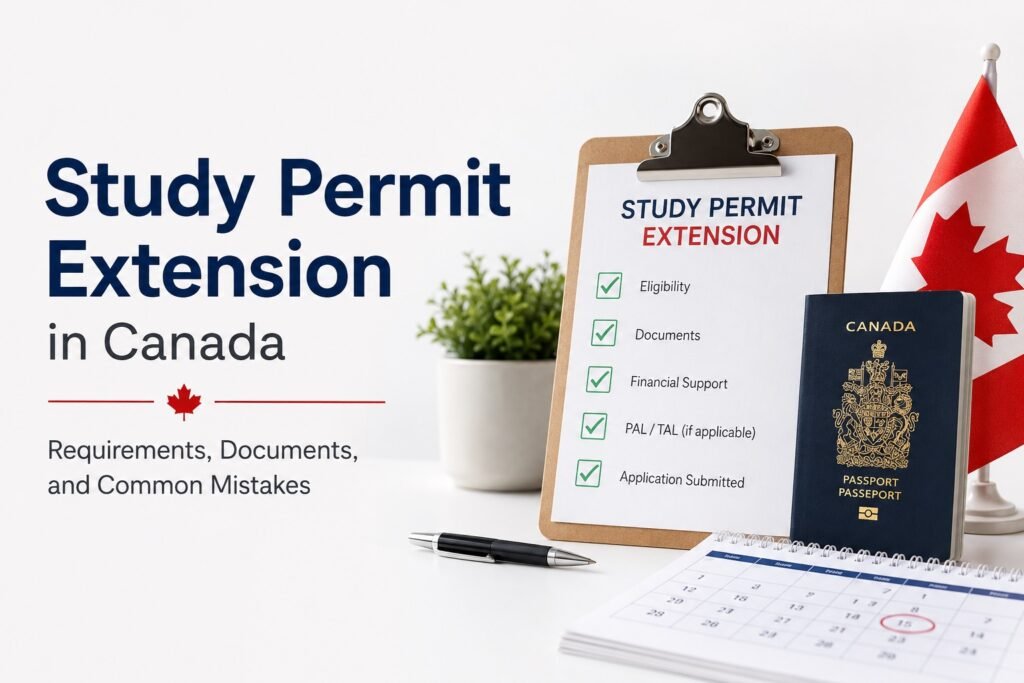
Students who already hold a study permit and need additional time to complete their program are in a different situation. The rules for a study permit extension in Canada address issues such as applying before permit expiry, maintained status, and restoration where status has already been lost.
5. Can You Start Studying While Waiting for the Study Permit?
Generally, submitting a study permit application does not itself authorize a visitor to begin a program of study that requires a study permit.
A person must have the appropriate authorization before beginning studies unless a specific statutory or regulatory exception permits them to study without a study permit.
This distinction is particularly important for visitors. A person may have valid temporary resident status allowing them to remain in Canada while still lacking authorization to begin their intended post-secondary program.
Applicants should therefore determine their authorization to study separately from their authorization to remain in Canada.
6. What Documents Should a Visitor Include?
The supporting documents will depend on the applicant’s circumstances, the application route and the requirements generated for the particular application. There is no single document package that is appropriate for every visitor.
A study permit application may include:
Immigration and identity documents: a valid passport, current visitor record or other proof of status, immigration history and the appropriate application forms.
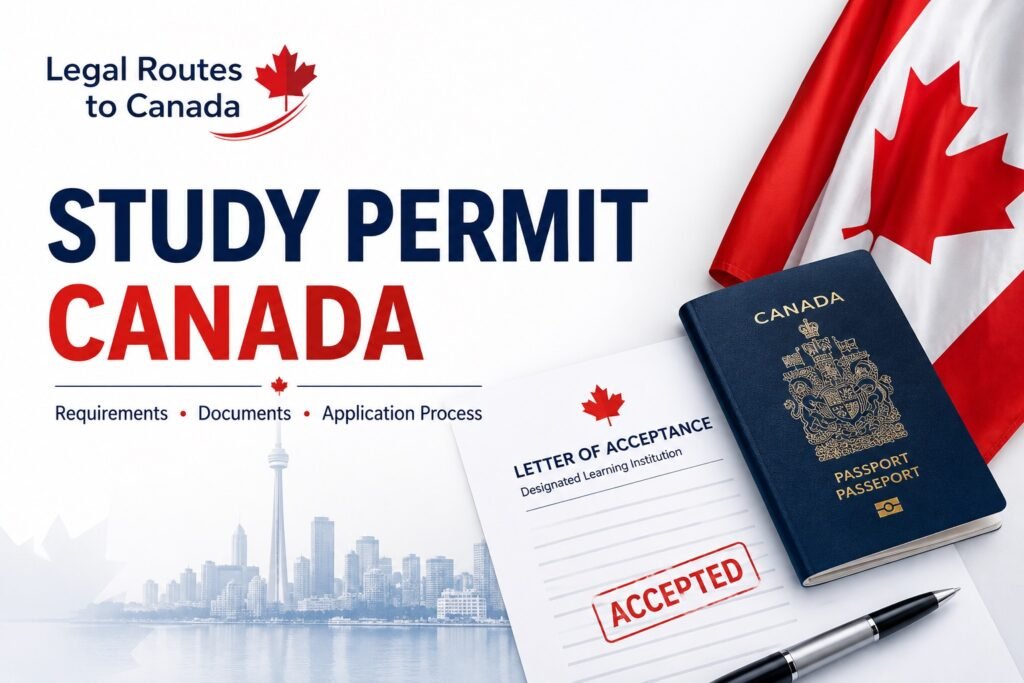
Study documents: a letter of acceptance from the DLI, PAL/TAL where required or evidence of an applicable exception, academic records and evidence of tuition payments.
Financial documents: bank statements, GIC documentation where applicable, tuition receipts, parental or other family support, evidence of the sponsor’s financial capacity and evidence concerning accommodation.
Purpose-of-study evidence: previous education, the reasons for selecting the program, its relationship to the applicant’s academic or professional history, career objectives and an explanation of any significant change in the applicant’s educational direction.
Previous refusals and other material immigration history should also be properly disclosed and addressed where relevant.
The practical lesson from the application material we reviewed is that the documents should work together. In the successful application, the evidence included an LOA and PAL, tuition evidence, financial resources, Canadian family support, parental support and a detailed explanation of the applicant’s study plans.
7. A Strong Study Plan Still Matters
Eligibility to submit a study permit application is only one part of the analysis. The applicant must still satisfy the substantive requirements for issuance of a study permit.
A study plan should explain why the proposed education makes sense for the particular applicant. Relevant questions may include:
- Why was this particular program selected?
- How does it relate to previous education or experience?
- Why is the applicant pursuing the program at this stage?
- What does the applicant intend to do with the education?
- If the academic direction has changed, what explains that change?
This can be especially important where a visitor came to Canada for one purpose and subsequently decided to pursue a longer program of study.
A strong study plan should explain why the proposed program makes sense in light of the applicant’s previous education, circumstances and future objectives. In Demyati v. Canada (Citizenship and Immigration), 2018 FC 701, the Federal Court found a study permit refusal unreasonable where the officer’s conclusions about the applicant’s bona fides and intended studies lacked adequate justification. The decision illustrates the importance of presenting a coherent study purpose and of assessing that purpose against the evidence actually provided.
A change in educational direction is therefore not necessarily fatal, but it should make sense and be properly explained.
For example, in one successful application, the applicant explained why moving from a general social-services program toward Early Childhood Education represented a more focused educational and career direction, rather than presenting the new program without explaining the change.
8. Financial Support: Can Your Family Pay for Your Studies?
Under IRPR 220, a study permit applicant must establish sufficient and available financial resources, without working in Canada, to cover applicable tuition fees, living expenses for the applicant and accompanying family members, and transportation costs to and from Canada.
Those resources do not necessarily have to consist entirely of money held personally by the student.
Parents, siblings or other family members may provide financial support where the arrangement is credible and properly documented. Depending on the circumstances, supporting evidence may include:
- the applicant’s own funds;
- tuition already paid;
- GIC funds;
- parents’ savings or income;
- a financial support declaration;
- the sponsor’s bank statements and employment or business evidence;
- proof of the relationship between the applicant and sponsor; and
- evidence of accommodation being provided without charge.
Applicants must demonstrate sufficient and available financial resources for their studies and stay in Canada. Where financial support is being provided by a parent, relative or other third party, the application should clearly document the relationship, the sponsor’s commitment and the availability of the funds. In Etwaroo v. Canada (Citizenship and Immigration), 2021 FC 1160 and Ejevuvor v. Canada (Citizenship and Immigration), 2024 FC 2054, the Federal Court found financial assessments unreasonable where documented third-party support was discounted or important financial evidence was not meaningfully considered.
However, a support letter alone does not necessarily establish financial sufficiency. The stronger question is whether the evidence demonstrates that the promised resources are credible, sufficient and genuinely available to the student.
In one application, the applicant’s Canadian relative provided accommodation and living-expense support backed by evidence of status in Canada, employment, income and banking records. The broader financial package also included paid tuition, GIC funds and parental financial resources.
9. Family in Canada and Ties to Your Home Country
Visitors are often in Canada precisely because they have relatives here. Having a parent, sibling or another family member in Canada should therefore be disclosed and considered in context rather than ignored.
In Bteich v. Canada (Citizenship and Immigration), 2019 FC 1230, the Federal Court found it unreasonable to draw a negative inference simply because an applicant had strong family ties in Canada. The Court also recognized that legally established family members in Canada may provide financial support and noted the legitimacy of dual intent under Canadian immigration law.
At the same time, an applicant’s circumstances outside Canada remain relevant. Parents, spouses, children or other close family members abroad, together with employment, property, economic circumstances and future professional plans, may form part of the overall temporary-resident assessment.
The presence of family in Canada and strong ties abroad are therefore not necessarily contradictory. Both should be presented accurately and assessed as part of the applicant’s overall circumstances.
10. What If a Previous Study Permit Application Was Refused?
A previous refusal does not necessarily prevent a person from applying again. However, simply resubmitting substantially the same application may leave the original concerns unresolved.
Before reapplying, the applicant should understand the reasons for the previous decision and determine whether additional evidence or explanation can meaningfully address them.
For example, one successful application followed earlier concerns relating to the applicant’s purpose of study and financial sufficiency. The later application provided substantially more detailed evidence concerning the study plan, tuition, finances, family support, accommodation and the applicant’s circumstances.
This illustrates why a reapplication should be prepared around the actual reasons for the previous outcome, rather than treating every refusal in the same way.
11. Common Mistakes When Applying for a Study Permit as a Visitor
Common problems include:
- assuming that visitor status automatically creates eligibility under IRPR 215;
- assuming that receiving an LOA allows a visitor to apply from inside Canada;
- using an application route without first determining the applicant’s regulatory eligibility;
- allowing visitor status to expire while focusing on the study permit;
- assuming a pending study permit application automatically authorizes studies;
- failing to provide a PAL/TAL where one is required, or evidence supporting an applicable exception;
- relying on family financial support without adequately documenting the sponsor’s ability and commitment to provide it;
- submitting a generic study plan that does not explain the applicant’s actual academic history and objectives;
- failing to meaningfully address a previous refusal; and
- overlooking passport validity and how it may affect the application.
Frequently Asked Questions
Can I change my visitor status to student status in Canada?
Not automatically. Visitor status itself does not make a person eligible to apply for a study permit after entering Canada. The applicant must determine whether they fall within IRPR 215 or whether the study permit must be pursued through the applicable outside-Canada process.
Can I apply for a study permit while I am visiting Canada?
Potentially, but the appropriate application route depends on your circumstances. Physical presence in Canada is not the same as eligibility to apply after entry under IRPR 215.
Does applying for a study permit extend my visitor status?
A study permit application should not simply be treated as a substitute for managing the applicant’s existing temporary resident status. Visitors should separately ensure that they remain authorized to stay in Canada while their study permit application is being processed.
Can I study while waiting for my study permit?
A pending study permit application does not, by itself, authorize a visitor to begin studies that require a study permit. A separate legal authorization or applicable exemption is required.
Can my parents or relatives pay for my studies?
Yes, third-party financial support may form part of the proof of funds. The evidence should establish the relationship, the amount and nature of the support, the sponsor’s financial capacity and that the funds are genuinely available.
Do I need a PAL or TAL if I am already in Canada?
Being physically present in Canada does not itself create a PAL/TAL exemption. Whether a PAL or TAL is required depends on the applicable study permit rules and whether the applicant falls within a recognized exception.
Final Considerations
For a visitor considering studies in Canada, the first question should not simply be “Can I apply while I am in Canada?”
The more important question is whether the applicant is legally eligible to apply after entering Canada under IRPR 215 or must follow the applicable process for a study permit made before entry.
Once the correct application route has been identified, the applicant must still address the substantive study permit requirements, including the purpose of study, financial capacity, PAL/TAL requirements where applicable, temporary resident considerations, passport validity and supporting documentation.
A carefully prepared application should therefore address both how the person is legally permitted to apply and why the study permit should be issued based on their individual circumstances.
Need help with a study permit application?
Applying for a study permit while you are in Canada as a visitor requires careful consideration of your current status, eligibility to apply from within Canada, and the appropriate application process. Professional advice can help you assess the correct route based on your circumstances.
Already studying in Canada?
If you already hold a study permit and need more time to complete your program, different rules may apply. Learn about applying before your permit expires, maintained status, restoration, required documents, and other important extension considerations.